
Not just any flat – a bloody modernist beauty from the 1930s, in what might be the most modernist city in Poland (and possibly the world): Gdynia. 75m² of glorious “rip it all out and start again”.
P is from Gdynia. I, on the other hand, was born on the opposite end of the country – as far as one can be without accidentally ending up in Ukraine. We met in London, and now we’re considering a move. Permanent? Semi-permanent? Not sure yet. But buying a place here felt like the first step.
To be honest, Gdynia didn’t strike me as a dreamy place to live at first. Don’t get me wrong, it’s clean, organised, safe – all the good stuff. But if you grew up in Poland outside the Tricity bubble, Gdynia wasn’t exactly on your radar. You heard about Sopot (cute seaside town with beaches and pastel buildings) or Gdańsk (gorgeous old town, big history, proper city vibes). Gdynia? Gdynia was the port. A functional blob between two prettier sisters. And that was about it.
What nobody told you – unless you were an architecture geek – is that Gdynia is stunning. Its old town (yes, there is one) is a listed area full of interwar modernism. Not in-your-face pretty, not tourist-trap pretty. It’s more subtle. Clean lines. Terrazzo staircases. Curved balconies. The kind of details you start noticing once you stop expecting Gothic churches.
Modernism was a whole revolution between the wars – out with excessive decoration, in with function and form. Streamlined shapes, chrome, reinforced concrete. It wasn’t about being plain – it was about being honest. Buildings meant to serve real people. And once I learned to read the city’s design language, I was hooked.
What really got me, though, is how the whole city works. It’s planned. Rational. Nowhere is more than 10 minutes’ drive from a beach or a forest. Proper forest too – with wild boars casually digging up public lawns. You can bike across the city without risking death at every turn (looking at you, London). The restaurants and bars are great not because they’re trendy, but because they have to survive all year round with locals. Everything is within reach. You’re 20 minutes from the airport, 10 from the motorway, 5 from a decent Aperol. There’s a 2km seaside boulevard with three public gyms and a city-run sauna. And if you want more, Sopot is 15 minutes away. Gdańsk is 25. Warsaw? 2.5 hours by train. What more could you want?
So. We started looking. We must’ve seen 20 flats in the city centre. I can now walk around Gdynia and tell you the internal layout of every fourth building. Why is it always something? The one with the curved walls and giant windows had only one bedroom and one bath – plus no balcony, no parking, no lift, no basement storage. Another was so dark I thought I’d gone blind. One had lovely views – but ceilings so low P could headbutt them (OK, he is nearly two metres tall, but still). One we loved got snatched from under our noses. Brilliant.
Then – as I was on a train to Gdynia, mindlessly swiping through listings – there it was. Just added. Looked promising. Quick call to the agent and boom, three hours later I was viewing it.
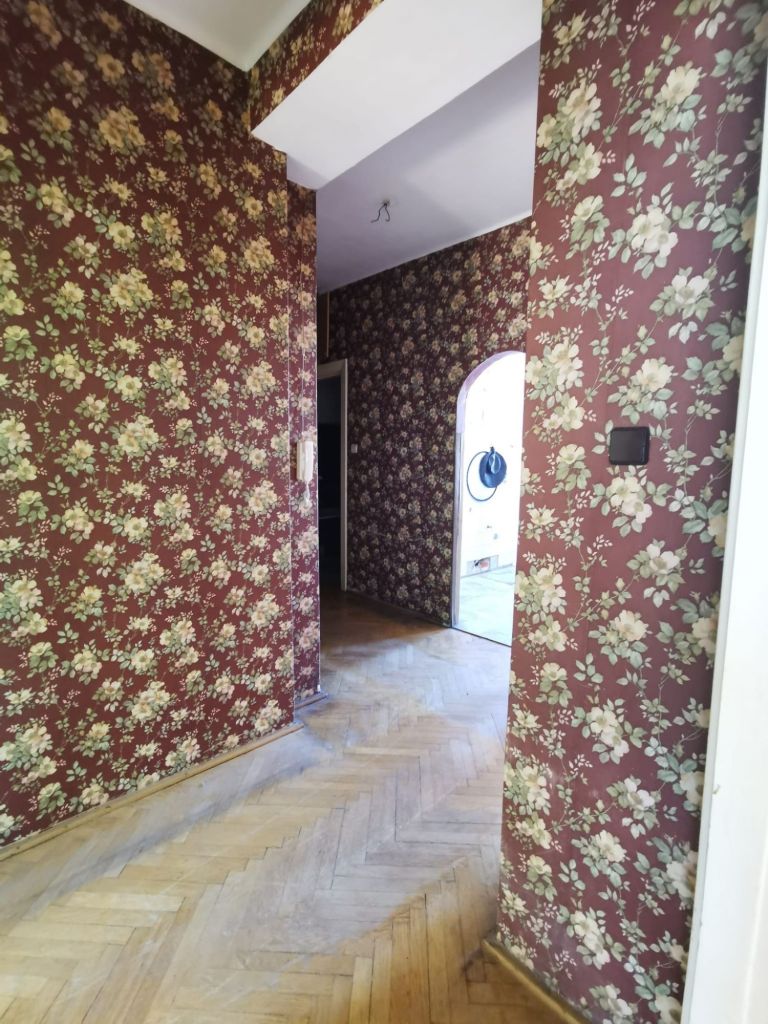
And here’s where the fun begins. What is it with estate agents assuming you’re clueless? This one was worse than usual – some 25-year-old lad who, within five seconds of entering, said: “And here’s the pantry, perfect for a real housewife.” Excuse me? I might enjoy a pantry, but being labelled a housewife from the get-go (no offence to housewives) is like waving a red rag at a particularly tired and sarcastic bull.
What he didn’t realise was: I build houses. Sometimes I tell them upfront. Sometimes I wait and enjoy the awkwardness when they realise they’re wildly out of their depth. This one found out fast. In five minutes he’d learned the building’s structural layout, a bit of its history, and that I fully intended to turn that “housewife pantry” into a second bathroom. Because who the fuck puts a pantry in a room with a window?

But the flat? Absolute dream. City centre. Halfway between the train station and the beach. On a listed, low-traffic street with most of the city’s bars and restaurants within five minutes’ walk. Top floor, dual aspect. Original 1930s staircase. Brand new lift. Private parking. Basement storage. And crucially – except for one chimney – no structural internal walls. Meaning: we can do whatever the hell we want, within plumbing reason.
Even better? Original pre-war windows. Parquet floors. I called P, told him to get his arse to the airport now. I was sure it wouldn’t stay on the market for long – especially since the price was fair and the agent accidentally let slip that they were desperate to sell.
Next day, P viewed it. And the agent? Fair play, he’d memorised everything I told him and delivered it word-for-word to P. I nearly died laughing.
Weeks later, it was ours.
At the viewing, the flat was full of old furniture – we even offered to buy some (I liked the sofa). No go. But imagine our shock when we got the keys and found that not only was the kitchen gone – they’d taken the light switches too. Pretty sure that’s illegal. Definitely rude. But whatever – it was ours.
And so began the hunt for a builder. These days, finding someone good is like finding a unicorn with a trowel. I called my dad, 600km away. Last time we used a local team for my mother-in-law’s bathroom, it was a disaster. This time, I wanted someone I could trust. Ideally my favourite builder ever – but he refused to come this far.
Eventually, we found someone: Mr Roller (as P now calls him). A retired electrician who – like every Polish man over 50 – also plasters, tiles, paints, and probably does dentistry on the side. Him and his son-in-law turned up one Monday, planning one week here, one week at home. Let’s just say that was optimistic. But we weren’t in a rush, and they were trustworthy – which matters a lot when you’re managing a build from 1,000km away.
First task: remove the parquet to reuse it later. Which meant: noise. So much noise. If you don’t know, there are two ways to lay parquet – glue or nails. Ours was nailed. That’s good (means it’s old and glue-free) but also horrible (near-impossible to remove without smashing half of it). You can’t exactly buy more of this stuff. It was made in Smyga – a place that was in Poland in 1936 and is now in Ukraine. Some pieces had a red stamp with the Polish eagle on the back. Not something you can pop down to the DIY store for.
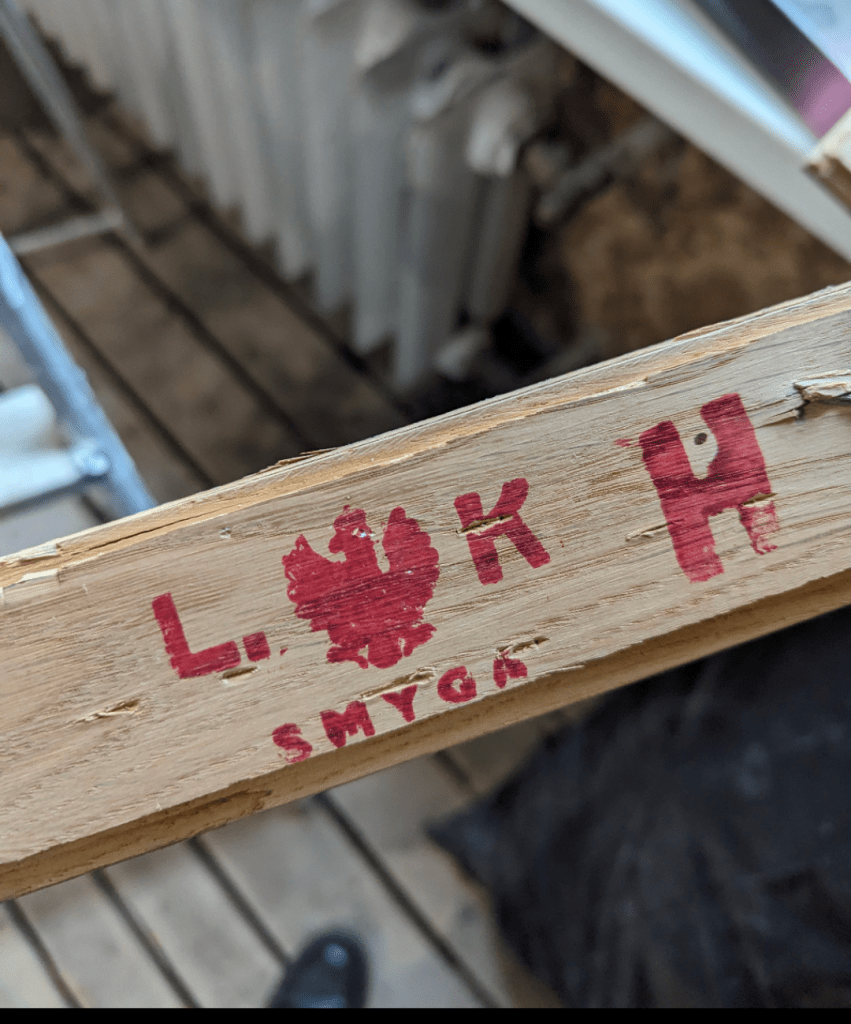
We spent three days pulling it up. I did my share. It’s a full-body workout. Who needs the gym? (The sauna afterwards, yes, always.) Underneath was old pine – the kind you can’t get anymore. Dense, heavy, and when you cut it, it still smelled like forest. I nearly cried.
We’re keeping them. Don’t know where or how yet, but we are. Even if it kills me.
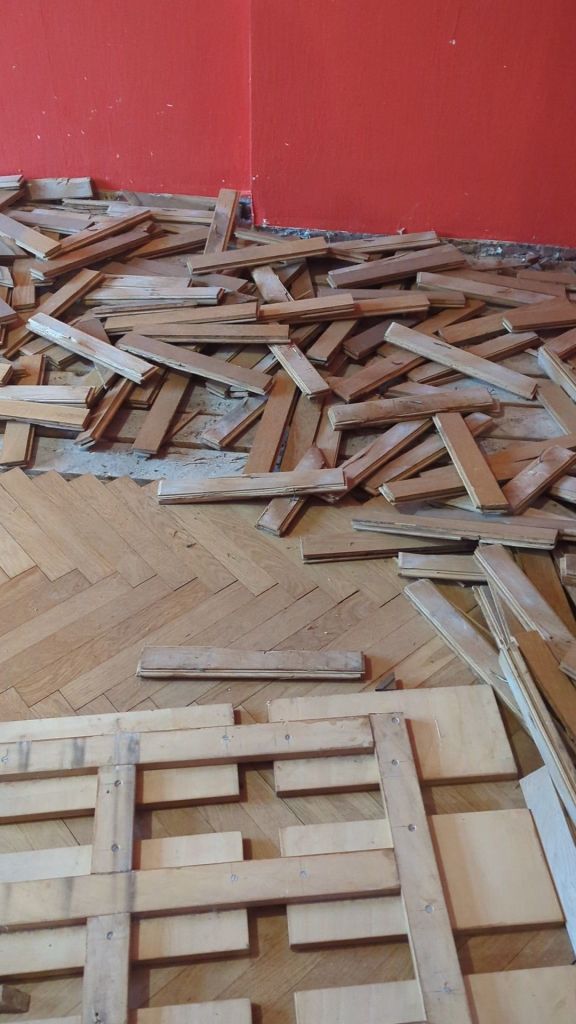
Once we cleared it all out, we discovered the subfloor: concrete slab, 70mm below the floorboards. Not much to work with. So I spent hours sketching layouts.
Option 1: Flip the bedrooms and living area. Put the kitchen in the alcove. That way, the living space gets the balcony, and we get cool, north-facing bedrooms (ideal for sleeping). Our elderly neighbour swears by north-facing kitchens – less rot, she says – but we have fridges now. Problem is, there’s only one soil pipe. And as much as you can pump it, it’s a pain in the arse. Pumps break. It’s messy.
Option 2: Leave everything where it is. Knock down the hallway and kitchen walls. Create an open-plan living space. It keeps the layout simple and makes the most of the light.
In both cases, the pantry’s becoming a small shower room. We considered other locations, but with just 70mm to play with, it’s tight.
So now, we’ve got one week to decide. Floorplans are drafted. And I’m somewhere between thrilled and terrified.
Let the renovation chaos begin.
 Refried Neurons
Leave a comment