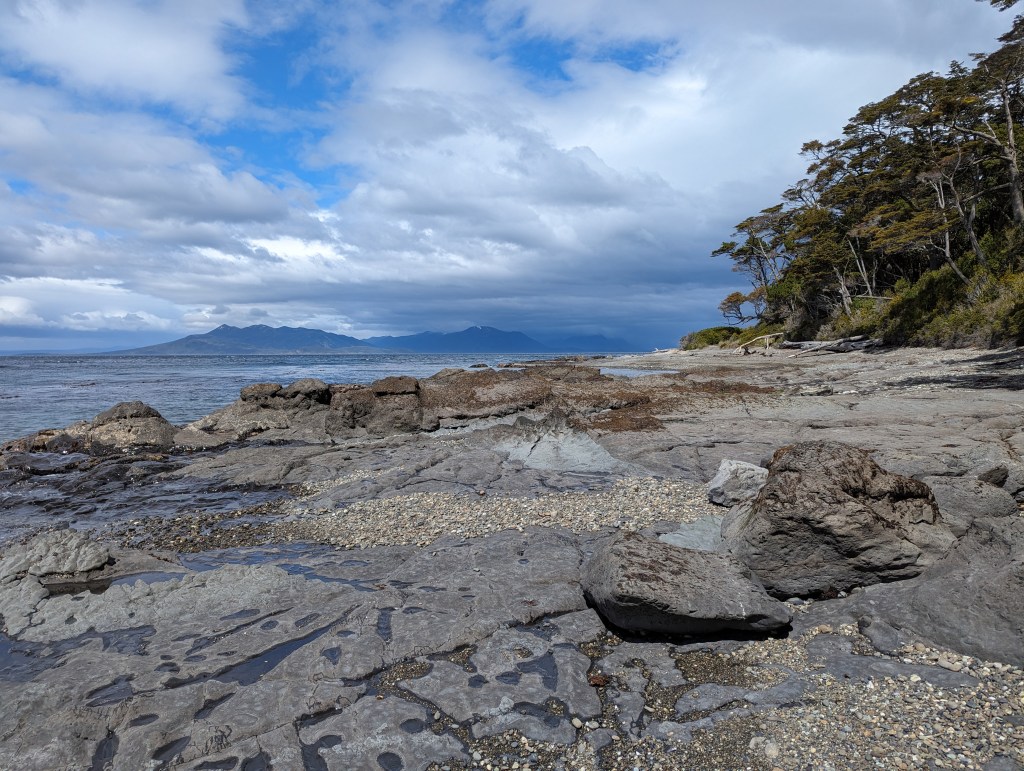
It was our final day in Patagonia. The night before, we made the long drive back to Punta Arenas and treated ourselves to a nice hotel for a proper goodbye. The wind was relentless—so strong I could barely stand still. Parking was another challenge; I had no clue where we could or couldn’t leave the car, so I just abandoned it in the nearest spot, praying it wouldn’t get towed. Of course, the hotel later told me they had their own parking, which meant moving it in gale-force winds. At one point I was literally bracing myself against the gusts, using every muscle to stay upright. Thank god for chains—they came in handy.

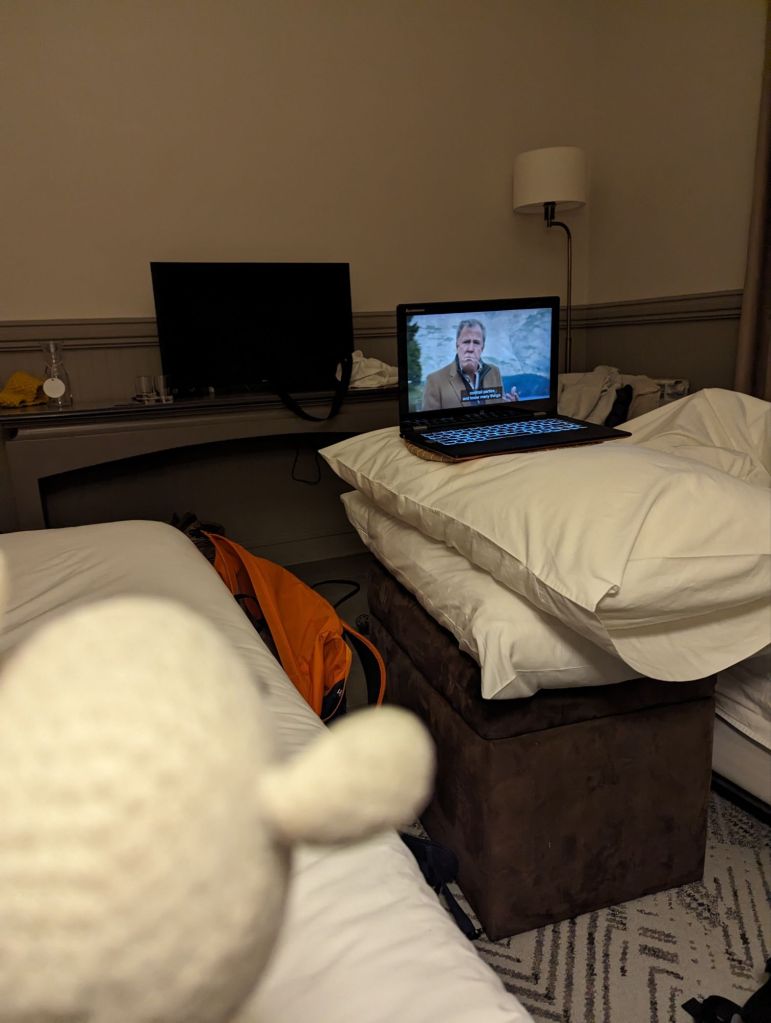
M was still feeling rough, so we spent the evening in, half-watching the Patagonia special of Top Gear. Maybe it gave her a bit more sympathy for why the local police officer wasn’t impressed with my British driver’s licence earlier in the trip.
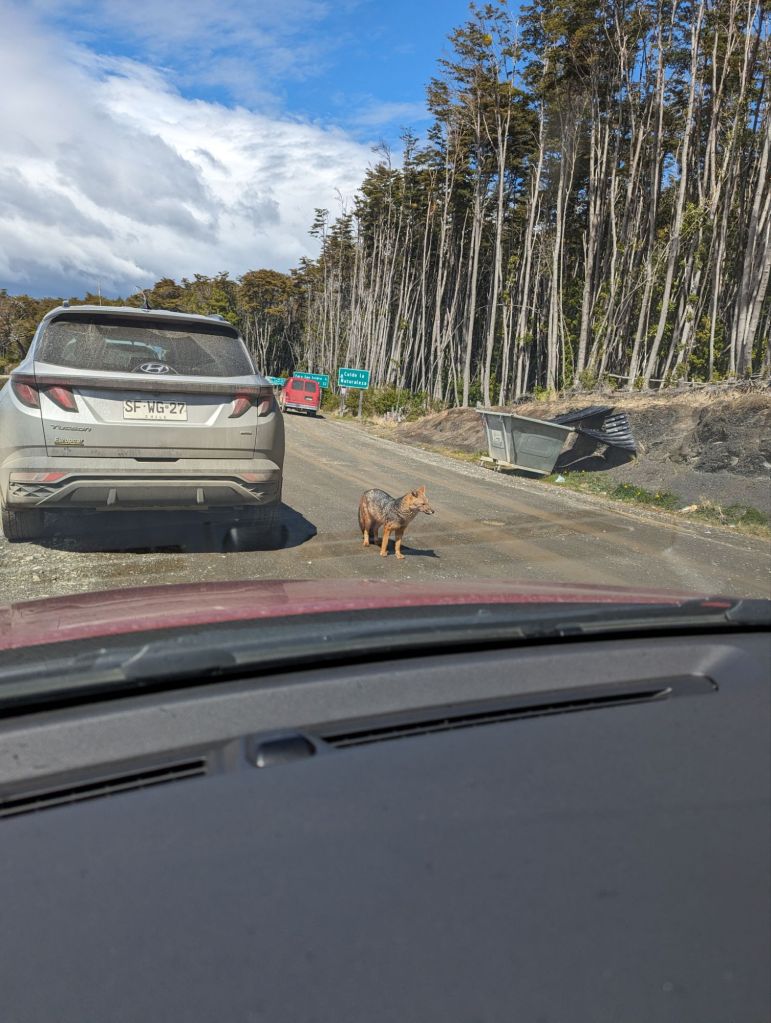
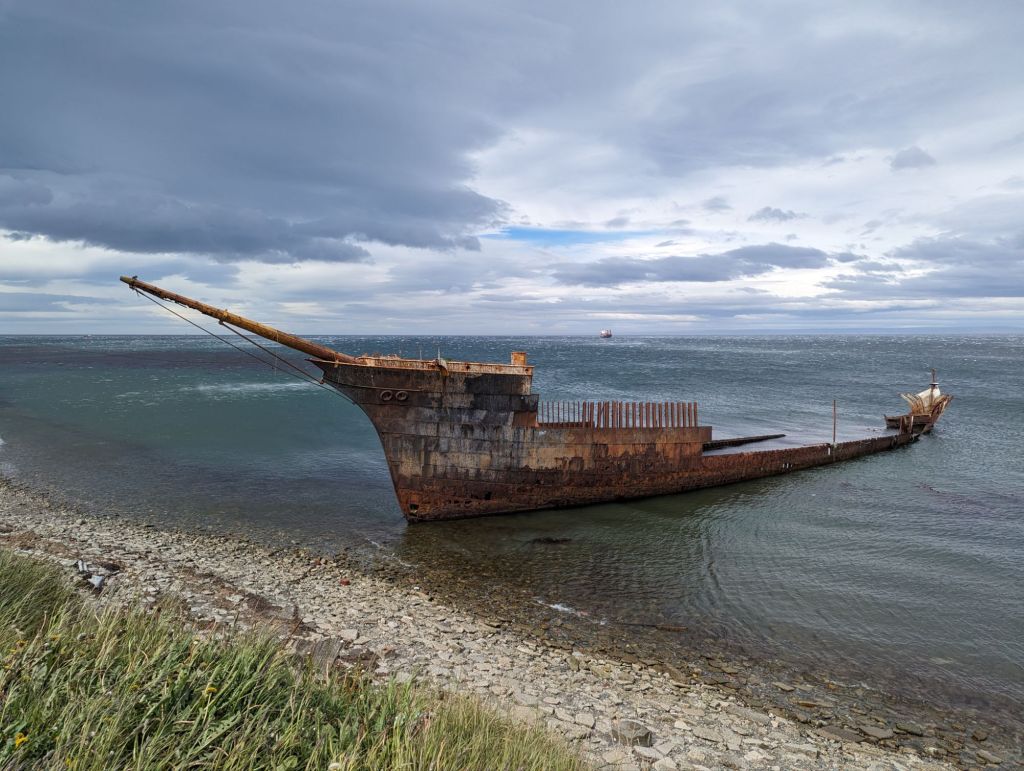
The next day, our flights didn’t quite align—mine around midnight, hers at 6 a.m. Since M wasn’t up for sightseeing, I took the car for one final drive. My goal was simple: see how far south I could go on the mainland. The road led me about 70 km along the Strait of Magellan, ending near Punta Árbol. The scenery wasn’t exactly spectacular—fishing huts, scattered farms, and rusting boats along the shore—but there was something quietly beautiful about it. At the road’s end, I parked, nearly ran over a fox, grabbed some water, and set off on a trail toward Faro San Isidro lighthouse.
The trail was easy, but I didn’t make it all the way. Instead, I slowed down, taking in my last views of Patagonia and the legendary Strait of Magellan. Europeans like to credit Magellan with its “discovery” as if the locals hadn’t known it was there all along. Still, for European sailors it was a major breakthrough—a treacherous, cold, wind-lashed shortcut between the Atlantic and Pacific long before the Panama Canal.
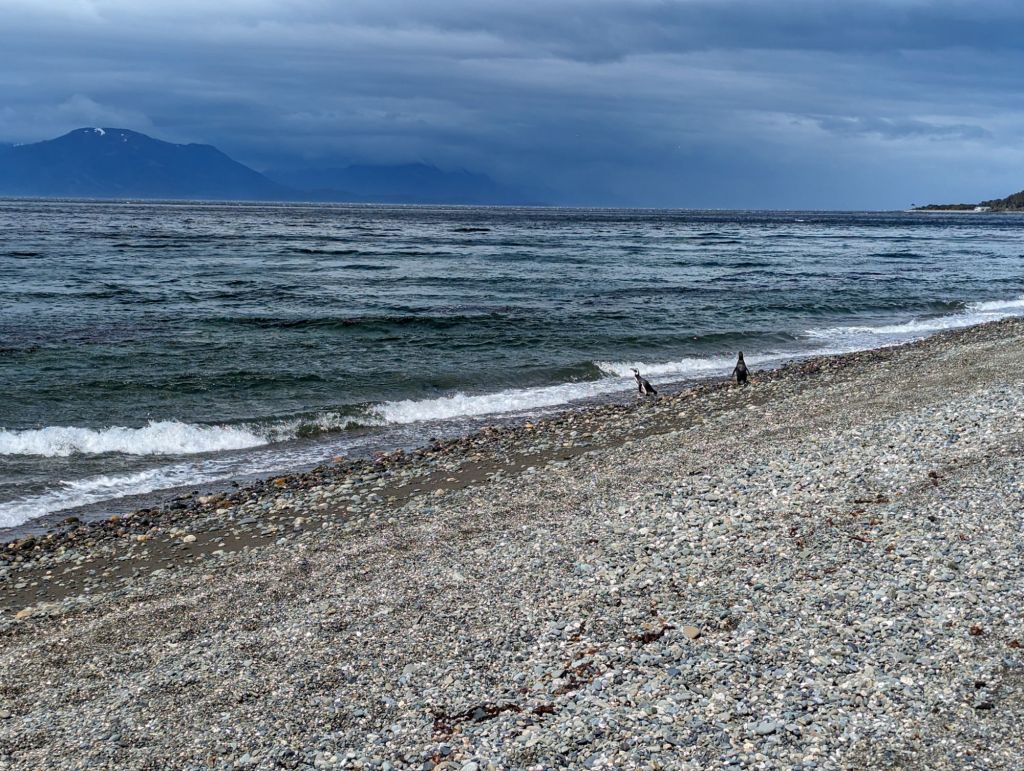
The sun was shining, the views were glorious, and I was almost alone. I regretted not making it to Tierra del Fuego to see the penguins—until luck struck. As I was about to turn back, I noticed a small group of people on the beach photographing something at their feet. I rushed over and, unbelievably, there they were—three little penguins waddling about on the pebbles. I snapped a photo from a distance, not daring to hope they’d linger, and edged closer. Before I reached the others, the penguins slipped into the sea and vanished. Still, I was thrilled. It felt like Patagonia giving me a perfect farewell gift.
A few hours later, I returned the car on a rather sketchy industrial estate outside Punta Arenas. My Uber arrived in the form of a pickup truck. I hesitated—was this really my ride?—but stuck out in the middle of nowhere, I climbed in. Back at the hotel, M wasn’t the least bit surprised. Apparently pickup Ubers are totally normal in New Zealand. Who knew?
We shared a last dinner, hugs, and goodbyes. Then I was off—three flights ahead of me on the way to Cuba.
Reflections
So, how was Patagonia? Did we do it the “best” way? Probably not—but it was a blast. No—honestly, it was fucking brilliant.
Having a car gave us total freedom. Sure, if we’d had a 4×4 and a spare wheel, it would have been less stressful at times, but our little red arrow carried us through without major damage. I loved not pre-booking accommodation—it let us change plans on the fly. That said, I wouldn’t repeat the overpriced, underwhelming massage in El Calafate. After days of hiking, horse riding, and sitting in the car, I needed something brutal, not a delicate tickle. Maybe our horse-stench had something to do with it. Who knows.
I also realised that cool hostels are for twenty-somethings. If I want a party these days, I’d rather join it after a good night’s sleep at a proper hotel.
If we had pre-booked, we never would have splurged $500 on staying inside Torres del Paine, for dated decor and cold showers. Next time, I want to kayak among fjords, finally cross to Tierra del Fuego, and maybe even try puma tracking.

But Patagonia isn’t just landscapes and wildlife—it carries a heavy history. The souvenirs I saw, decorated with painted Selk’nam faces, made me curious. Then I learned the truth: they’re gone, wiped out in a campaign of genocide by European settlers. Officially extinct. Some say a few survived through marriage, but their culture is lost. And while history books focus on German atrocities, the Spanish and Portuguese alone were responsible for tens of millions of deaths across South America. Seeing their faces sold as souvenirs by descendants of colonisers was disturbing—like Germans selling figurines of Jews as trinkets.
On that sombre note, I’ll close this chapter. Patagonia, I will see you again.
 Refried Neurons
Leave a comment