I have officially passed the magical age until which I was able to drink six pints of Guinness, followed by a massive burger and chips, with absolutely no health consequences. Or so I thought. Don’t get me wrong, I always knew that too much sugar and fat were bad for you, that processed food was trash, and that you should exercise, which I always did with varying degrees of effectiveness and frequency.
Yet, twelve years after moving to London, I found myself 12kg heavier.
Recently, I tried to squeeze into a jumpsuit from twelve years ago for a black-tie party. I managed to get it on. After asking my partner multiple times whether he was sure I didn’t look like I was busting out of it, he looked at my squashed boobs and said, “Noooo, darling, you look amazing.” So, I braved it.
Big mistake. The clip holding my cleavage in place popped open every twenty seconds throughout dinner. I think it is finally time to accept that I need to get rid of some of my old clothes. Or is it?
For the last year or so, I’ve been completely hooked on the Meta and YouTube longevity algorithms. And not just longevity, pretty much anything relating to health: biohacking, friction-maxing, keto… oh, the list goes on. I started watching Steven Bartlett and a few other health gurus, and actually reading my Women’s Health magazine rather than just flicking through the pages.
Have I hacked it? Fuck no. Am I trying? Yes.
The Gut Health Obsession
Right now, I am sitting on my balcony trying to catch the morning blue light. According to a lovely book I read called Chasing the Sun, this light is critical for signaling to my body that it’s time to sleep some 12 to 16 hours later.
This will be followed by what I call a “healthy-ish pre-breakfast.” It’s a concoction of Greek yogurt or kefir mixed with psyllium husks, pine tree pollen, flaxseed, flax oil, maca, and a few other ingredients. I do add fruit on top, though I’m still not sure if that’s a good idea. I need to get myself a continuous glucose monitor to check how my body actually behaves. It feels good, but my main goal is putting fiber into my system first thing in the morning rather than sugar.
After doing the Zoe program and reading Glucose Goddess (if you are trapped in the same algorithm as me, you know exactly which ones I’m talking about), I learned that fiber is critical! Until about two years ago, I knew the word fiber, and I knew my body needed it, but my brain never processed it as critical for gut health. No importance was given to it whatsoever.
This shift might stem from the fact that gut health science and its massive influence on the whole body, especially your mood, has moved dramatically post-COVID. (Jeez, it seems COVID is the new Jesus; everything is either BC or AC now).
I think the last century disconnected the mind and body. Ancient cultures used to treat them as one, but at some point, we just decided to ignore that.
For me, this isn’t all about weight. Two years ago, I went through burnout and depression, which was swiftly followed by a SIBO (Small Intestinal Bacterial Overgrowth) diagnosis. So, target number one: sorting out my gut! My levels of good gut bacteria weren’t terrible, but they weren’t singing and dancing either. I’ve taken my fair share of antibiotics in life. Poland is very keen on prescribing antibiotics for a runny nose (thank God my mum wasn’t having any of that), but I was still a sickly child and adult. Tonsillitis almost every year since I turned 20 and pneumonia four times during childhood did the job.
When I got the SIBO diagnosis, I was told I couldn’t eat 50% of the food in the world, and they offered me more antibiotics. Yay.
But for me, taking a pill is a last resort. It just treats the symptoms without dealing with the cause. So, I started reading and listening.
I know it’s incredibly easy to be dragged by the algorithm into buying tons of supplements, which I did—or thinking that drinking your own urine is a brilliant idea—which I did not do.
Still, fiber found its place in our daily routine. Or, in my case, every other day, or every four days when I actually feel like it or remember (welcome to the ADHD world).
Fiber wasn’t the only discovery. Another epiphany came after spending two months in Asia, where they don’t use dishwashers and everything is washed by hand. Again, it was something I kind of knew but chose to ignore: rinse aid.
My mum never allowed rinse aid at home (or fabric softeners, or air fresheners). But once I moved in with my partner, who likes his glasses to be shiny, rinse aid was added to the machine religiously. As it turns out, it slowly destroys your gut lining.
At some point, I read that dishwasher tablets can be harmful because they don’t rinse out properly. My genius solution was, “Right, let’s run the dishwasher twice so it rinses properly.” The issue? Rinse aid is added to the last rinse cycle, so it doesn’t matter how many times you run it- it stays on the bloody dishes, and then you eat and drink it. Oh, joy.
So, I went on a journey to find the best dishwasher tablets without rinse aid. I called some of my girls, and they were all like, “What? You didn’t know?” followed by advice on which brands they use. The issue was that one friend was in New Zealand, the other was in Poland, and I was in the UK, trying to find something off the shelf that wouldn’t bankrupt me.
ChatGPT came to the rescue. After scanning every bloody label for the AI to analyze, I ended up with Ecover Zero, which has only a few ingredients. Less ingredients – more money, make sno sense to me but hey! The new issue? After the cycle finished, all the plastic containers and parts of the dishwasher were covered in a white powder. AI to the rescue again: apparently, rinse aid is needed because those cleaning chemicals don’t get rinsed away from plastics without it. Some sort of chemical reaction. Great! I really do not want to do the dishes myself.
So, I decided to give our good old friend vinegar a go, and it did the trick! But it also prompted me to replace all my plastic containers with glass—the best thing ever.
- A: They clean much better.
- B: They don’t leak chemicals into my food.
- C: I can use them as bowls to serve food!
No more putting things into glass bowls and then moving leftovers into plastic containers. I serve it in the same glass container it was stored in! Okay, maybe it’s not ideal for a fancy dinner party, but I don’t host those anyway, so fuck it, my mates can take it. And magic happened: my SIBO symptoms were gone in about five days!
Return of Polish Cuisine Staples
There was also one more interesting thing I found out along the way before the dishwasher debacle: oat milk is seriously bad for you!
It actually gave me an oat intolerance, and looking back, I think it seriously contributed to my depression. There was a collective moment when dairy was labeled “bad”- bad for the environment, bad for you, just avoid it at all costs, so we all switched to plant milks. Oat milk felt like a revelation. It didn’t contain estrogens like soy, and it gave you the creamy, smooth texture of normal milk. So every day, my morning latte and my porridge were made with oat milk (oats with oats, brilliant) or sugar with sugar if you look at molecules.
Then we did intolerance tests. Mine came back with exactly one item: oats!
I started tracking it, and it turned out I didn’t have to run to the toilet at work because of “stress,” but because of the oat milk. I was giving myself daily diarrhea, which in turn was destroying my gut. This led me to read actual scientific articles, and it turns out oat milk is the number one thing you should probably get rid of. No more oat milk, no more emergency runs to the toilet!
This ongoing learning curve has taught me a lot of new things and reminded me of lessons I learned in school but that my teenage brain decided to lock away in its deepest, darkest corners.
Now comes the funny part for me: I come from the land of ferments! Fermented cabbage, gherkins, and various other staples dominate Polish cuisine. Nothing of this sort existed in the UK until recently. If you were lucky, you could find sauerkraut in a Polish specialty shop, and that was it. Then came kimchi, and the British world honestly, the whole world went crazy.
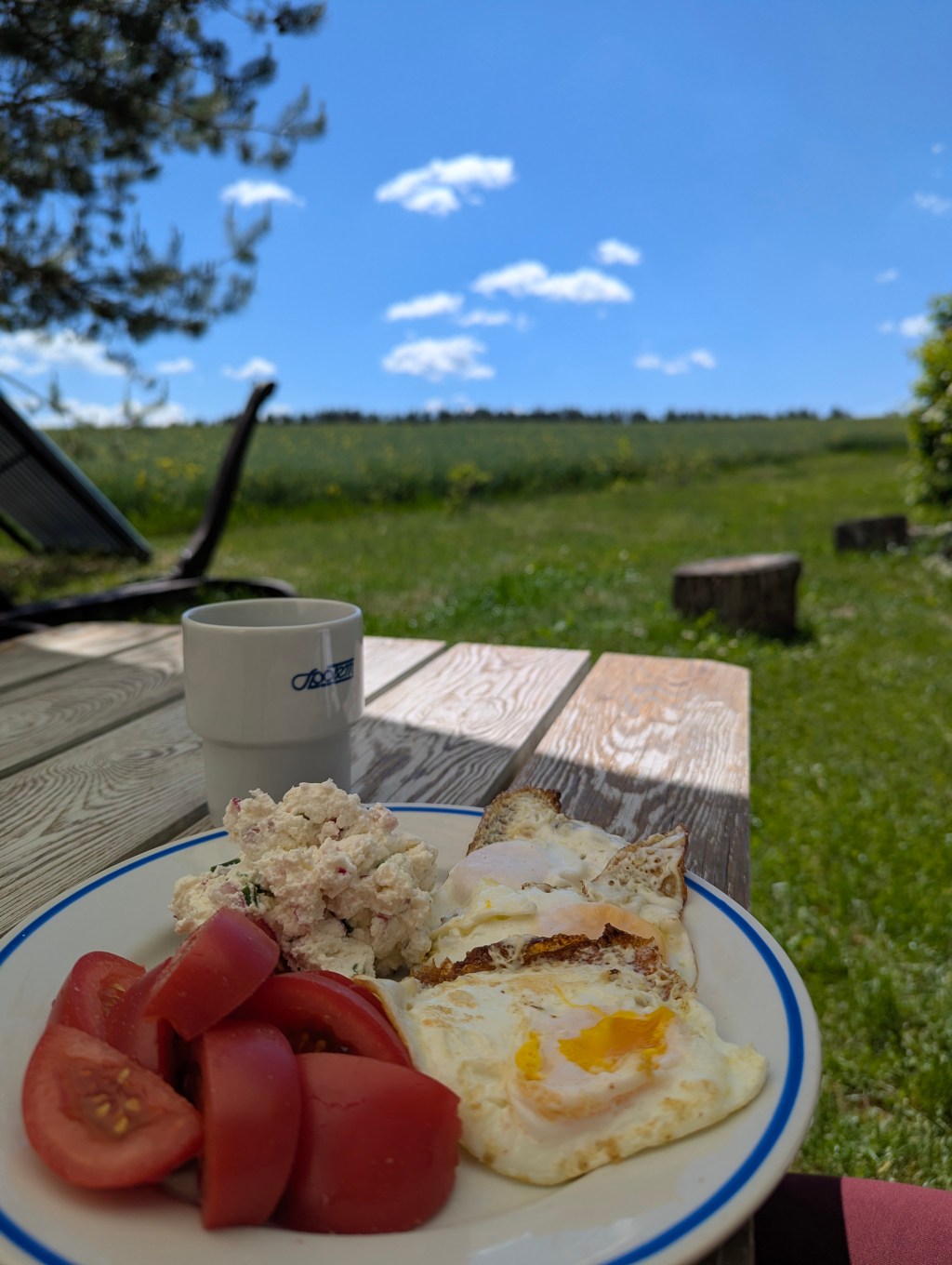
But it wasn’t until a few years later that everyone started talking about the massive gut health benefits of eating ferments. Now, every health influencer tells you that you should have ferments at least twice a day like they have been invented yesterday, whether it’s kimchi or kefir (which, again, has been known and enjoyed in Poland for generations). Suddenly, my British friends are asking me for a sour gherkin masterclass when they visit Poland. It makes me laugh just a tiny bit. After living in London for quite a few years and tasting cuisines from all over the world, I am right back to the comforting, homey food of kefir, sourdough bread, and kapusta kiszona (sauerkraut).
The Evil of Visceral Fat
Another “novelty” for me was visceral fat. This caught my interest after another episode of stomach aches. I went for a scan, and they didn’t find much – except for some fat on my liver, which was flagged as dangerous.
Every now and then, I do a Boditrax scan, and it tells me my visceral fat is around 3%. I kept ignoring it because it was in the green zone, so I didn’t have an issue, right? Until the liver scan. Then I watched a Steven Bartlett episode featuring a specialist in cardiovascular health. He, and pretty much every other health expert I’ve watched since (thank you, algorithm), said that visceral fat is the cause of all disease and evil in this world.
Okay, maybe not all of them, but it can cause cancer, liver failure, and oxidative stress, which leads to bad moods and joint issues… The list goes on. It’s the fat you can’t grab because it sits behind your muscles, wrapped around your organs. The worst part? You can be skinny and still have dangerous amounts of visceral fat without knowing it. So, target number two: get rid of visceral fat, pronto!
That led to even more algorithmic videos and podcasts about keto, intermittent fasting, and sugar. I’ve done intermittent fasting before and loved it! But it was easy when I was single, I just didn’t eat until lunch, or I skipped dinner, no problem. It’s a bit harder when you want to enjoy meals together as a couple. Still, that’s a shitty excuse, as I work from home most weekdays while my partner is in the office. It’s just weak willpower, that’s it!
So, I got myself a continuous keto monitor for my arm and installed Carb Manager (paying quite a few pounds for it). Well, two of the monitors stopped working after five days. They replaced the first one, but then told me they wouldn’t replace the second because of their policy. I am now on the third one, hoping it won’t die before the promised two weeks are up.
I have only achieved a state of ketosis once so far, so it’s not going great. I’m starting to think I should have tried this in the winter, not in the middle of summer when all the lovely fresh fruit is available.
But why keto? Apparently, it’s the best and fastest way to burn visceral fat. You can achieve ketosis (it does sound a bit like catharsis) by either fasting or depriving your body of carbohydrates. Voices are divided on whether this is actually good for you long-term, but I concluded I could give it a go. After all, I do feel really good when I’m intermittent fasting, my brain is just so much clearer and I have way more energy. It’s odd and a bit counterintuitive that you are depriving your body of fuel, yet you have more energy.
Keto burns visceral fat incredibly well because your liver is essentially forced to turn the fat it’s covered in into energy units called ketones! It also helps regulate your insulin, which is critical because insulin is what turns excess sugar into fat and stores it around your liver. Don’t get me wrong, it’s not insulin’s fault; it’s our fault for eating way too many carbs. Aparently, fasting and keto help reverse insulin resistance. It almost resets it, which makes sense to me, if you get insulin resistance by eating too many carbs, you should be able to reset it by avoiding them.
It’s also interesting that if you look at all the major ancient religions, they all have fasting built into them. Whether it’s Ramadan or Lent it seems ancient knowledge has always held that fasting is good for you. Even when you look at hunter-gatherers, they had times of plenty and times of no food at all. Maybe you need to feel hunger for your brain to go into “hunting mode” that clear, action-oriented state of mind, which is exactly what I feel during a fast.
Balance or rathar lack of it…
I might not have mastered keto yet (I don’t count the three hours I managed that one time), but what I did achieve is realizing just how many carbs I used to eat versus how many I actually need. It is staggering. In a way, I always knew potatoes and bread broke down into sugar, but I was also taught that a “proper” meal requires a massive portion of carbs. That might have been a good idea if you were a farmer fifty years ago burning thousands of calories a day, but with my sedentary lifestyle, even a one-hour workout in the gym won’t burn it all off.
I still eat bread and pastries from time to time. I like my little pleasures every now and then, but the total amount has been reduced massively. There is no side of bread with my shakshuka anymore, and my protein and salad portions have doubled to replace the chips. Hopefully, the next time I get a scan, my liver will be clean and red instead of yellow with fat!
But all of this brings me to the longevity and biohacking movements, and the dangers that come with them. It’s something a mate flagged to me when she was put on a low-carb diet: all these healthy habits can kind of kill your social life. What’s the point of going to the pub if you can’t eat or drink anything except water while you’re there?
What is the point of having a perfectly healthy liver and gut if you have no friends and no one to talk to?
Balance is everything… Unless you are celiac, a bit of bread or potatoes once a week or a glass of wine probably won’t kill you. At least, that is what I will keep telling myself. Because as much as I would love to be able to go hiking when I am 90, I also want to have people around to do it with!


Leave a Reply